

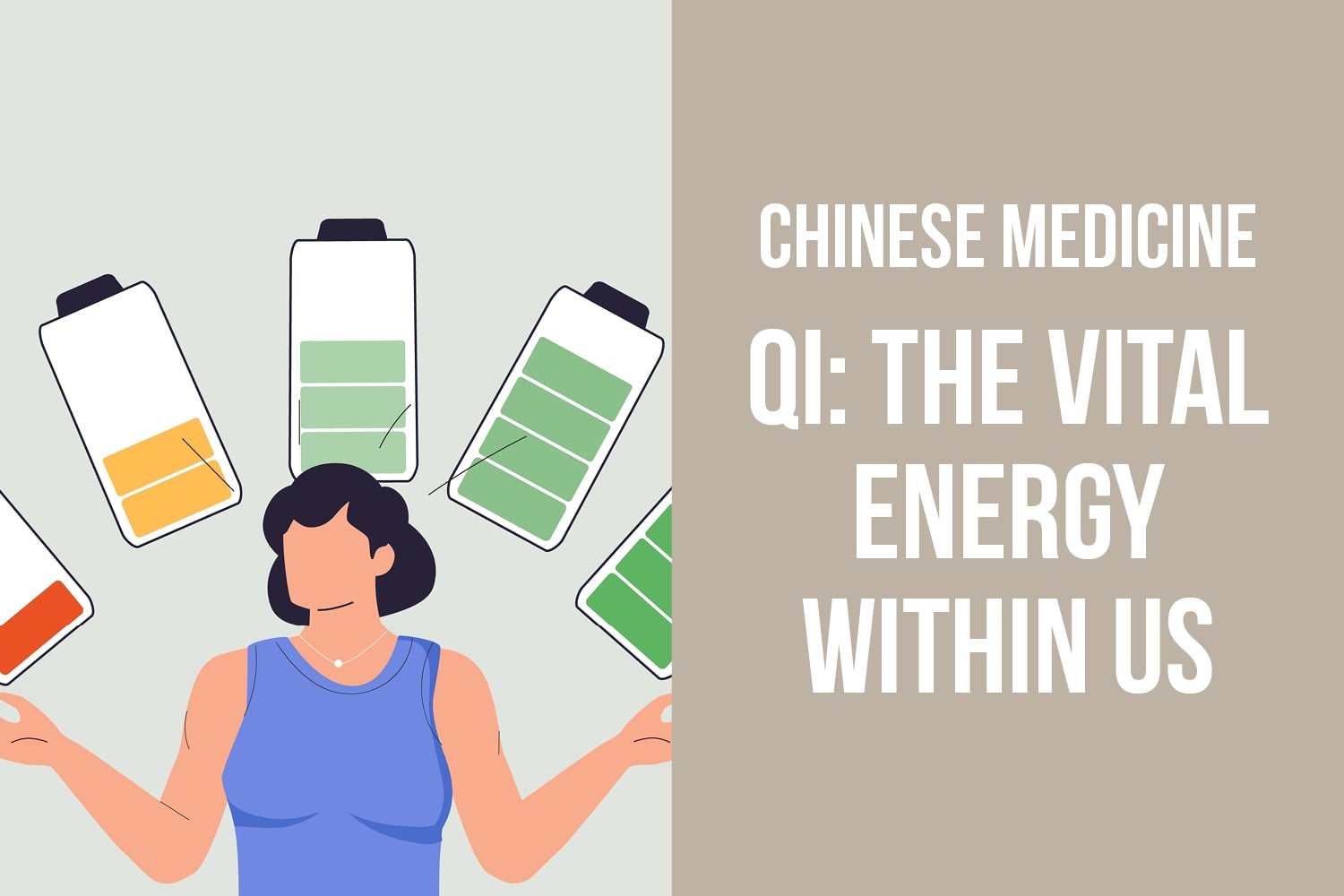
Have you ever felt truly full of life?
That feeling of natural vitality and ease is what Chinese medicine calls Qi. It is the vital energy that animates every part of your body and keeps you functioning at your best.
Qi (pronounced “chee”) is not a mystical idea. It is a practical way of understanding the energy that drives all movement and transformation in the body.
When Qi is strong and flows smoothly, you feel balanced, energised, and well.
Qi is the foundation of all life processes. It moves, protects, warms, transforms, and holds the body together. Everything you do and feel is powered by this vital force.
You inherit some of your Qi from your parents, but much of it is produced from the air you breathe and the food you eat. This means your daily habits directly influence the quality of your energy.
A healthy lifestyle helps your Qi stay abundant and resilient.
Qi does not move randomly through the body. It travels along channels called meridians, forming an intricate network that links your organs, limbs, and tissues.
You can imagine this system as a series of rivers carrying nourishment to every corner of the body. When these rivers flow freely, everything downstream flourishes. If they become blocked, the surrounding landscape begins to suffer.
The smooth flow of Qi connects your body into one harmonious whole. This is why a problem in one area can often create symptoms somewhere else.
Disruption in the flow of Qi is one of the most common causes of imbalance. It can take two main forms: stagnation or deficiency.
When Qi is stagnant, it struggles to move. This often feels like tightness, pressure, or emotional frustration. Pain from Qi Stagnation is usually localised and may come and go.
Qi Deficiency, on the other hand, means you do not have enough energy to sustain normal function. You might feel tired, light-headed, or short of breath. Your voice may sound weak, and your limbs may feel heavy.
Recognising which type of imbalance is present is key to effective treatment.
Acupuncture works directly with the body’s Qi. Using very fine needles, we stimulate specific points along the meridians to influence the quality and direction of energy.
When Qi is stagnant, acupuncture helps to move it. You may feel a sense of release or warmth as the flow is restored. When Qi is deficient, treatment focuses on strengthening and replenishing energy reserves.
Moxibustion, the gentle warming of points using a dried herb called moxa, is often used to nourish and build Qi. It is particularly helpful for fatigue, cold sensations, and low energy.
You can support your Qi through simple, consistent habits. Regular movement keeps energy circulating. Practices like walking, yoga, or Tai Chi are especially effective.
Breathing deeply and eating nourishing, seasonal food also play an important role. Food provides the raw materials for Qi, while air brings it to life. Avoiding overwork and managing stress will help prevent depletion.
Adequate rest allows your Qi to renew itself. Sleep is not simply a pause; it is a vital time when your energy replenishes and repairs.
Your Qi reflects the rhythm of your life. When you live in balance, your energy feels steady and clear. When it becomes disrupted, your body will let you know through fatigue, tension, or changes in mood.
Acupuncture and mindful self-care can help restore this natural balance. By tending to your Qi, you create the foundation for physical health, emotional stability, and lasting vitality.
Your body already knows how to heal. All it needs is the right support to keep your Qi flowing freely.

contact@wealdchiropractic.co.uk
Unit 29 Graylands Estate, Langhurst Wood Road, Horsham, West Sussex RH12 4QD
Website design by theshapingbay.com