

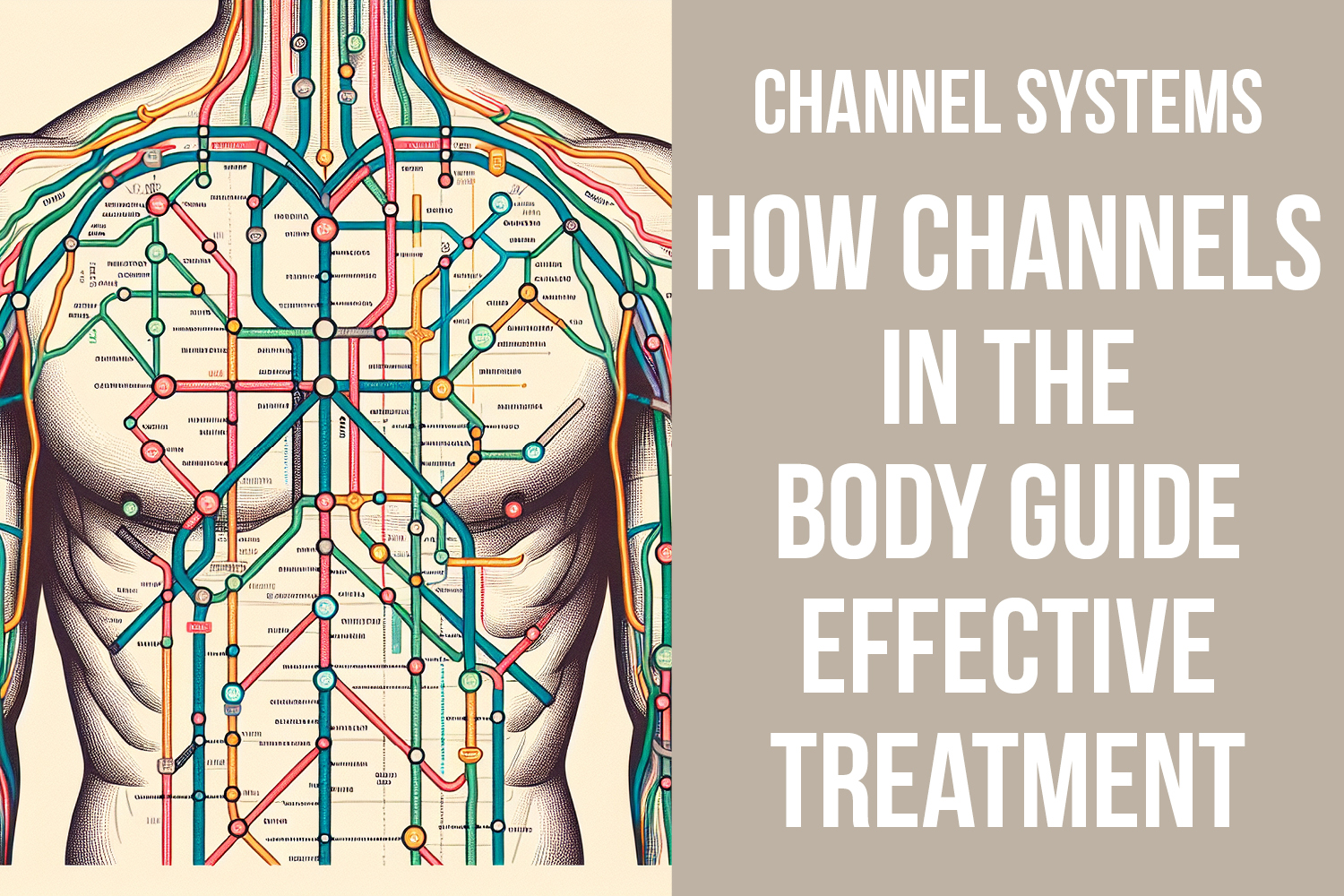
The body is a highly connected system. In acupuncture, we don’t look at your various body parts in isolation. Rather, we see a complex network of pathways that link your internal organs to every surface, tissue, and structure.
These pathways, known as channels, act like a map that helps us understand how your body functions as a whole.
By tracing these routes, an acupuncturist can see how an issue in one area might actually be connected to a broader pattern happening elsewhere in your system.
The primary channels act as the main highways of this network.
There are twelve of these channels, and each one is associated with a specific organ system. They run from your torso out to your limbs and head, and ensure your internal organs stay constantly linked to your physical exterior.
These pathways aren’t just physical lines. They’re functional routes that transport vital substances like Qi and blood to nourish every part of you. This is why acupuncture points located on the hands or feet can have such a profound effect on the internal organs they’re linked to.
Because these channels have a predictable course, they allow us to understand how the internal state of an organ can influence the health of the skin, muscles, and joints along that specific path. By stimulating points along these highways, acupuncture helps to regulate the flow and ensure resources reach their destination.
Beyond the primary channels, there are secondary pathways that add depth to this network. The Luo vessels, for example, branch out from the primary channels to connect different areas. This ensures that nourishment reaches even the most superficial layers of the body.
The Divergent channels act as deeper, internal links that provide extra support to the primary system, particularly in the chest, abdomen, and head. Finally, the Extraordinary vessels serve as reservoirs.
They don’t have their own organs, but they store and regulate the body’s essential energy. This helps to maintain balance when the primary channels are under stress. Together, these secondary vessels ensure that the body’s resources are distributed efficiently.
When the flow within these channels is disrupted, the body often produces physical signals along the route of the pathway. You might notice localised sensitivity, a change in skin temperature, or a persistent dull ache in a specific area.
Because these channels connect the interior to the exterior, a disruption in a specific pathway often reflects the state of the organ it’s linked to. For instance, if a channel associated with the digestive system is congested, you might notice signs of tension in the muscles where that channel travels.
Acupuncture is utilised to clear these blockages by stimulating specific points to encourage the smooth flow of Qi. These signs aren’t isolated events; they’re the body’s way of communicating that a specific circuit needs attention.
Channel theory is a tool for interpretation. When you come to see us, we don’t just look at where you feel an issue. We look at which channels pass through that area.
This allows us to trace the problem back to the organ system that may be involved. By understanding the anatomy of these pathways, we can piece together a clearer picture of your overall health.
It’s a way of reading the body’s internal language. This approach ensures that we aren’t just addressing a single spot. Instead, the entire network is considered to understand the root of the imbalance.

contact@wealdchiropractic.co.uk
Unit 29 Graylands Estate, Langhurst Wood Road, Horsham, West Sussex RH12 4QD
Website design by theshapingbay.com